One of the most common struggles for adults with ADHD is chronic lateness.
This isn’t usually caused by laziness or lack of care.
Instead, ADHD affects time awareness, transitions between tasks, and working memory — something often called time blindness.
The following strategies can help reduce last-minute stress and make leaving the house much easier.
ADHD brains often underestimate how long things take.
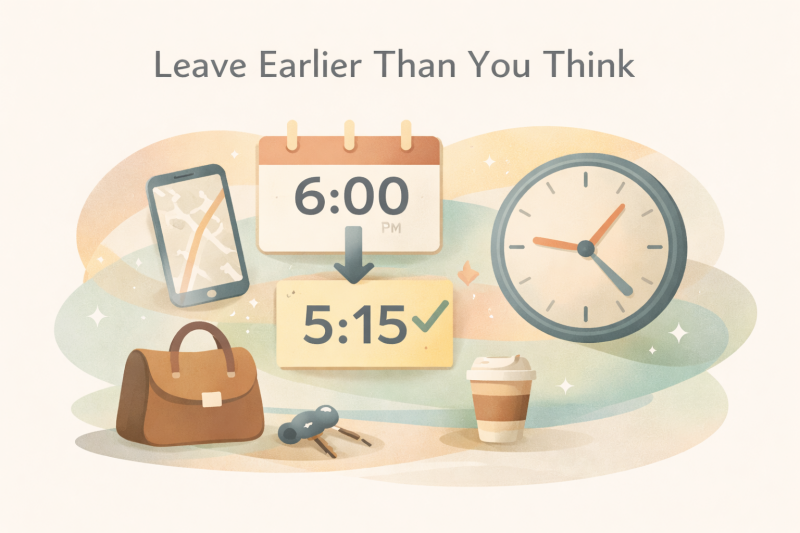
A simple solution is to subtract 10–15 minutes from the time you think you need to leave.
Example:
Dinner reservation: 6:00
Maps says leave: 5:30
ADHD leave time: 5:15
This buffer dramatically reduces stress.
Instead of one reminder, use three alarms.
30 minutes before leaving - Start wrapping things up.
10 minutes before leaving - Shoes, coat, keys.
Leave time - Out the door.
External cues work better than relying on memory.
Designate one place near the door for essential items:
✔ keys
✔ wallet
✔ bag
✔ work items
✔ important documents
Nothing else goes there.
This removes the last-minute scavenger hunt that causes many people with ADHD to run late.
Morning executive functioning is often weaker for ADHD brains.
Preparing a few things the night before can make mornings dramatically easier.
Examples:
✔ pack your bag
✔ prepare lunch
✔ place documents at the launch pad
✔ set out clothes
Small preparation reduces morning stress.
Leaving begins when shoes go on, not when you walk out the door.
Once shoes are on:
• no starting new tasks
• no checking your phone
• no new conversations
Shoes act as a clear signal that it’s time to transition.
ADHD is not a motivation problem.
It’s often a regulation and timing difference.
External supports — timers, reminders, routines, and visual cues — help the brain manage transitions more effectively.
Additional ADHD Resources
Some helpful tools include:
If ADHD is affecting your daily life, work, or relationships, therapy can help you develop strategies that work with your brain — not against it.